Field Notes
Practical notes on systems, governance, and implementation reality.
Short essays, implementation patterns, and working observations from the space between application architecture, cybersecurity governance, and organizational execution.
-

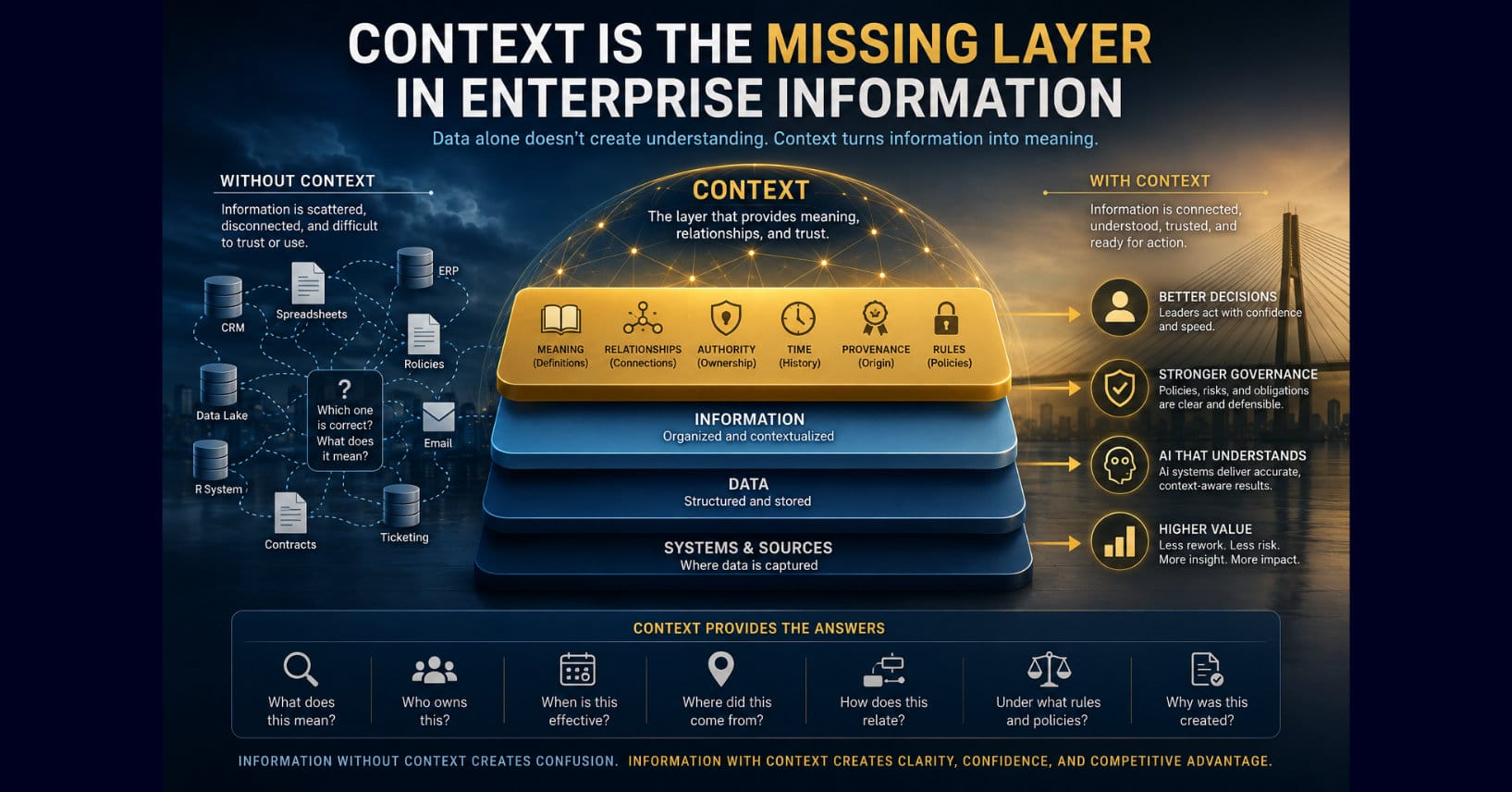
Context Is the Missing Layer in Enterprise Information
Enterprises preserve enormous amounts of data and content but frequently lose the context that makes information meaningful. AI, governance, and decision-making increasingly depend on preserving that missing layer.
-
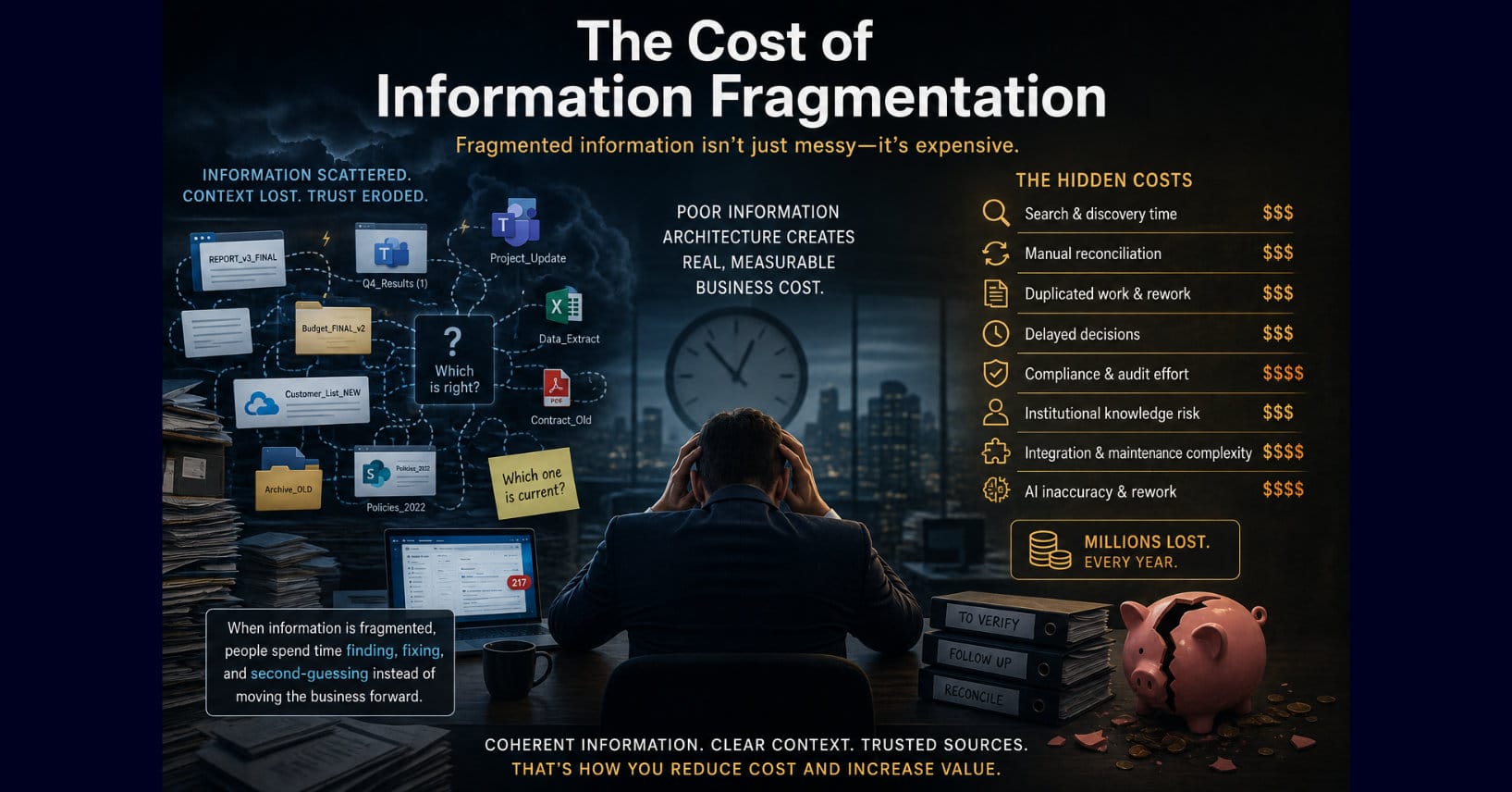
The Cost of Information Fragmentation
Information fragmentation is more than an inconvenience. It creates a persistent enterprise tax through search, reconciliation, duplicated work, slower decisions, compliance effort, integration complexity, and unreliable AI.
-
Your Marketing Team May Be Training Customers to Click Phishing Links
Marketing wants customers to click. Cybersecurity teaches them to hesitate. When legitimate email mimics phishing behavior, the enterprise creates a trust and governance problem.
-
The Illuminati Just Recruited Me. Apparently, They Use Gmail.
The Illuminati invited me to join by email, promising wealth, celebrity connections, and global fame. There was just one problem: apparently, they use Gmail.
-
Why Information Architecture Is Not Data Architecture
Data architecture structures, stores, integrates, and moves enterprise data. Information architecture addresses something different: the meaning, context, relationships, authority, and trust surrounding that data.
-
The Enterprise Has an Information Architecture—Whether You Designed It or Not
Every enterprise already has an information architecture. The question is whether it was intentionally designed or simply accumulated through years of systems, repositories, documents, and disconnected decisions.
-
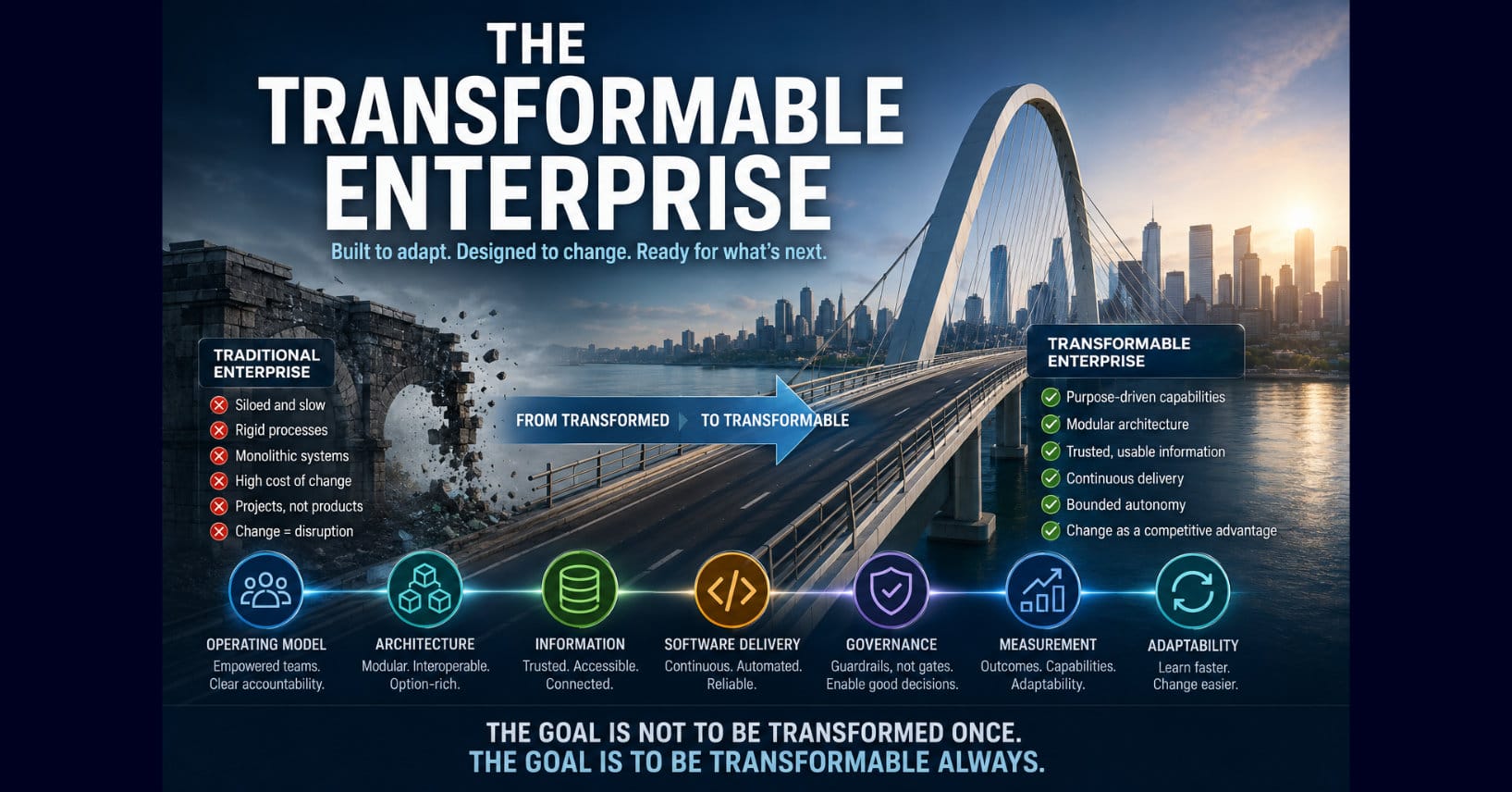
The Transformable Enterprise
The goal of digital transformation is not to transform once. It is to build an enterprise capable of continuously absorbing technological and business change.
-
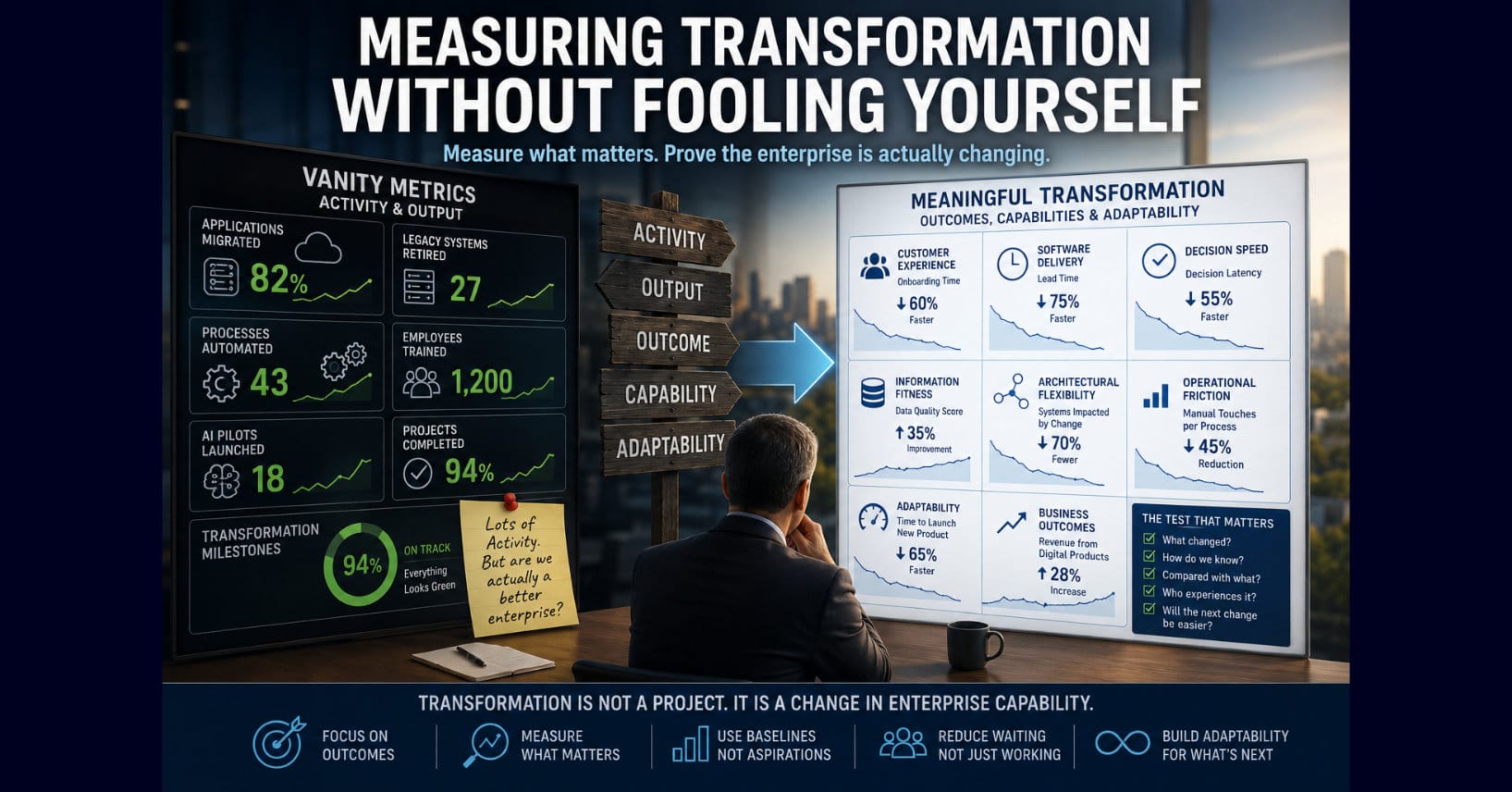
Measuring Transformation Without Fooling Yourself
Transformation dashboards can be completely accurate and still tell the wrong story. Measure outcomes, capabilities, and adaptability—not simply activity.